
Applying the Negative-Pressure Method to Packaging Seal Integrity Inspection
The Widespread Use of Plastic Packaging Bags in the Food Industry
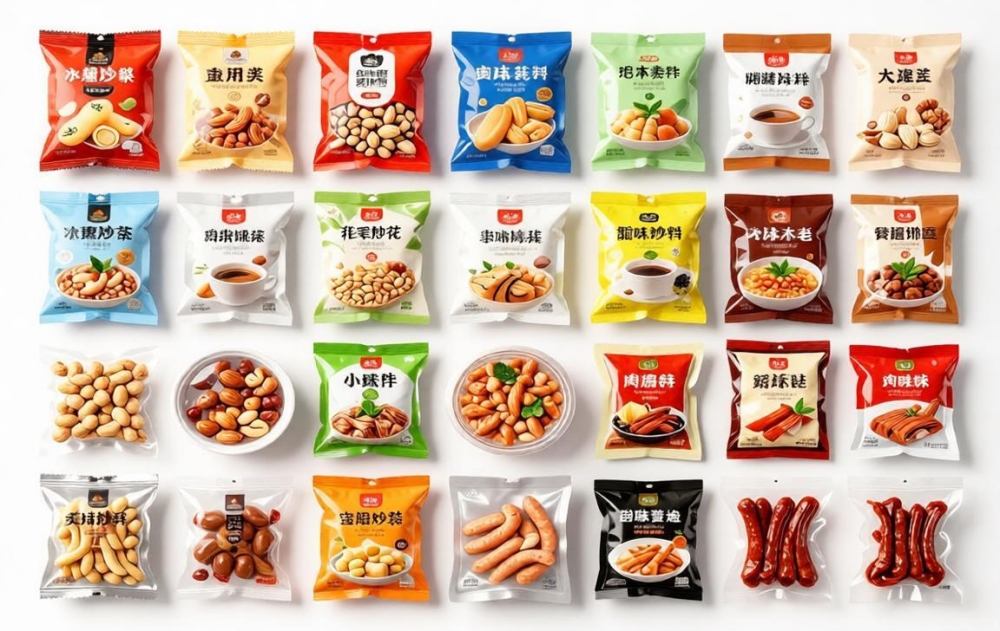
In today’s food industry, plastic packaging bags are practically everywhere. From snack foods, nuts and roasted seeds to milk powder, coffee and tea, and on to frozen foods, ready-to-eat meals, sauce sachets and vacuum-packed deli products, flexible plastic laminates have become the mainstream form of food packaging thanks to their light weight, low cost, strong barrier properties and ease of printing and transport. Whether it is a stand-up pouch or a retort pouch on a supermarket shelf, or a vacuum bag or foil bag moving through e-commerce logistics, the plastic packaging bag carries the protection task across the entire chain, from production and warehousing to transport and final sale. In effect, the seal quality of a plastic bag directly determines whether every single food item reaches the consumer safely and intact.
Why Seal Integrity atters in Food Packaging
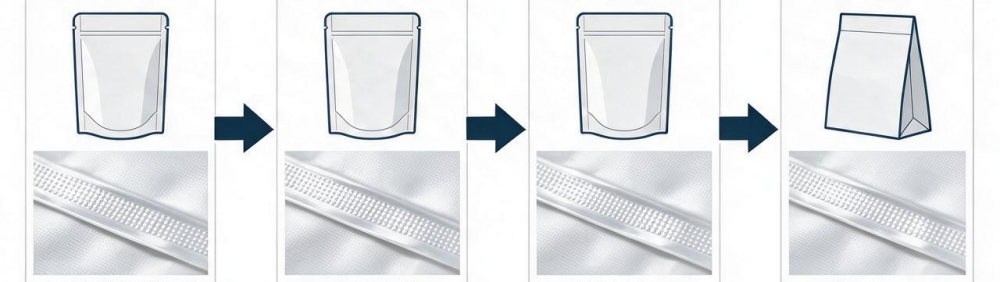
Seal integrity is one of the most critical performance indicators of food packaging. An intact seal is the last barrier between the food and the outside environment. It blocks the intrusion of oxygen, moisture, microorganisms and dust, prevents the contents from becoming damp, oxidized, moldy or spoiled, and thereby extends shelf life while preserving flavor and nutrition. For oxygen- and moisture-sensitive products such as milk powder, nuts, coffee and meat products, a tiny leak invisible to the naked eye can cause an entire bag to fail prematurely within its shelf life. Seal integrity is also an important basis for quality control and compliant product release in food enterprises.
Risks Posed by Packaging Leakage
Once a package leaks, the risk escalates layer by layer along the supply chain. The first is a quality and safety risk: a leak exposes the food directly to air and microorganisms, triggering oxidative rancidity, moisture caking, mold growth and even contamination by pathogenic bacteria, posing a direct threat to consumer health. The second is a commercial risk: products that lose vacuum, swell or seep will trigger consumer complaints and returns, and in serious cases lead to large-scale recalls, inflicting a double blow of economic loss and reputational damage. There is also a compliance risk: poor sealing may be judged as failing to meet food safety standards, affecting market launch and export. Effective seal testing is therefore a key step for food enterprises to control risk and safeguard quality.
The Negative-Pressure Testing Principle
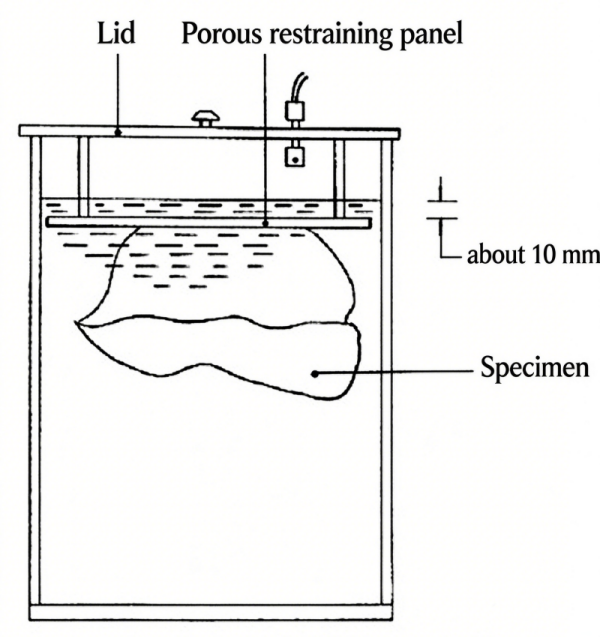
The negative-pressure (vacuum) method is one of the most widely used and intuitive approaches to packaging seal integrity testing. Its principle is as follows: the sample is placed in a vacuum chamber, and the chamber is evacuated so that a pressure differential forms between the inside and the outside of the sample. Under this differential, if the sample has a leak point, internal gas escapes outward through the leak; conversely, a well-sealed sample shows no gas escape. Two judgment methods are commonly used: first, immerse the sample in water and observe whether a continuous stream of bubbles escapes from one and the same spot; second, observe the expansion of the sample under vacuum and the recovery of its original shape once the vacuum is released. Both methods clearly reflect the seal performance of the package. This method complies with GB/T 15171, ASTM D3078 and a number of other standards.
Testing Procedure
1、Sample preparation: select an intact food packaging bag to be tested (for example, a milk-powder bag, a vacuum deli bag or a foil bag) and check the seal area for obvious damage or wrinkles.
2、Parameter setting: power on the instrument and, according to the sample and the test requirements, set the vacuum level (adjustable from 0 to -90 kPa) and the holding (dwell) time (accuracy 1 s, up to ≤ 9999 s).
3、Loading the sample: fill the vacuum chamber with clean water to a level that fully submerges the sample, immerse the sample in the water and close the sealed lid.
4、Evacuation: press the start button; the instrument begins evacuating the chamber and automatically replenishes air at constant pressure to keep the vacuum level stable at the preset value.
5、Observation and judgment: during the set holding time, watch whether a continuous stream of bubbles escapes from one and the same spot on the sample surface; if so, a leak exists there. At the same time, observe whether the sample expands abnormally and whether it returns to its original shape after the vacuum is released.
6、Recording and finishing: release the vacuum, open the lid and take out the sample, and record the observations and the pass/fail judgment.
Conclusion
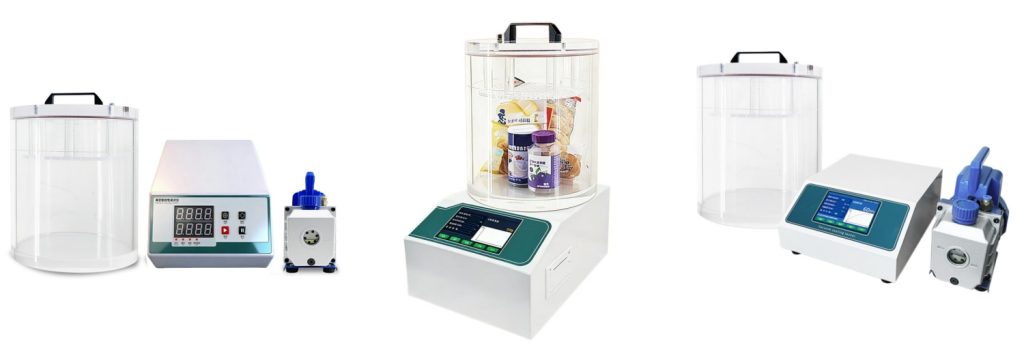
In the food industry, the seal integrity of packaging bags is both a quality indicator and a safety baseline. Using the negative-pressure method to test the seal integrity of plastic packaging bags is intuitive to operate and reliable in its results, allowing leakage risks to be identified promptly during production and before release and helping enterprises reduce quality risk, complaints and recalls. The MF-200 Sealing Tester is designed precisely for this need: its high-clarity acrylic vacuum chamber allows clear observation, its automatic constant-pressure air replenishment keeps the whole test stable at the preset vacuum level, and its precision push-button control is simple to operate with stable, long-lasting performance. It meets the needs of routine sampling inspection and quality control in food enterprises and offers a reliable safeguard for the safety and quality of food packaging.
Contact Us
For further information on the Leak Tester, for technical documentation, or to have a seal integrity inspection solution and sample testing service tailored to your specific food packaging, please feel free to contact us. We look forward to working with you to safeguard the safety and quality of food packaging.
Contact Information
Email:maomao@dansentech.com
Inquiries about product brochures, quotations and cooperation are welcome.
Leave a Reply